

Peace Brigades International

Careers at Peace Brigades International
Peace Brigades International provides protection support and recognition to local human rights defenders who work in areas of repression and conflict and have requested our support.
We advocate at all levels from the soldier at a local check point to national governments and international bodies like the UN for international human rights accountability.
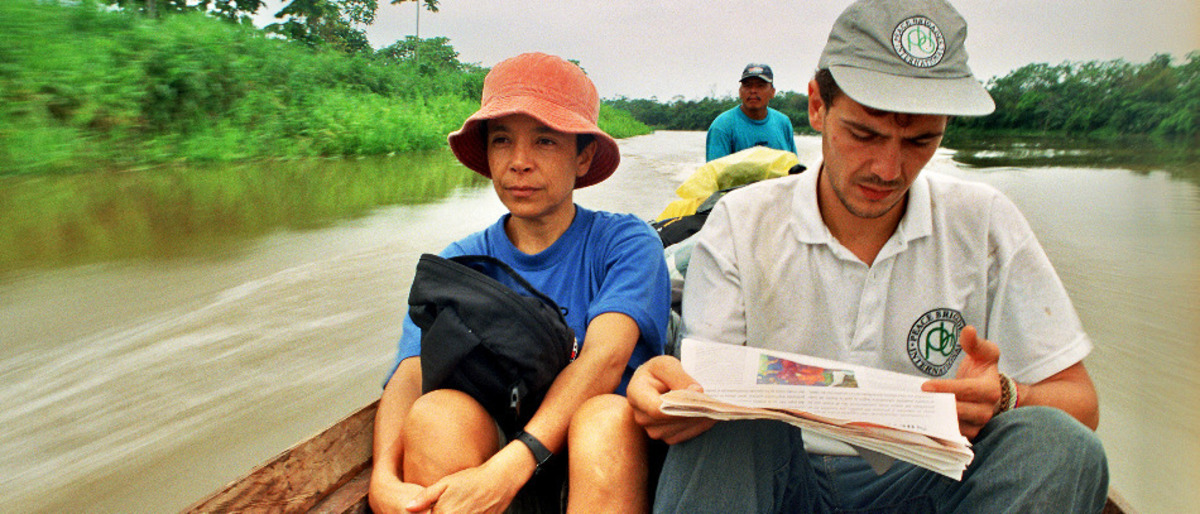
Our international volunteers on the ground send a powerful message that the world is watching and prepared to act.
PBI UK is one of 16 PBI country groups whose work complements and supports our field projects in Colombia Guatemala Mexico Nepal Kenya and Honduras.

About us
PBI has been working to support human rights and promote nonviolence for 35 years. We send teams of international observers to areas of conflict and repression to provide protective accompaniment to local human rights defenders whose lives and work are under threat. Our work is based on principles of non-partisanship and non-interference, in the belief that lasting transformation of violent conflict cannot be imposed from outside but must be based on the capacity of local people to build a genuine peace. We act only at the express request of local people and it is they who determine where our assistance is most needed.
PBI UK, as one of 12 country groups in Europe and North America, is responsible for the vital support work that allows the field programmes – in Colombia, Guatemala, Honduras, Mexico, Kenya, Indonesia and Nepal – to operate smoothly. Its main areas of work are political support building, recruitment and training of volunteers, outreach, publicity and fundraising.

Our Impact
In 2015, Peace Brigades International provided protection and support to 148 women and 161 men human rights defenders from 50 organisations in seven countries. Between them, these organisations helped thousands of women, men and children who have been denied their basic rights – from being forcibly evicted from their land, to seeing family members ‘disappeared’, to suffering torture and rape at the hands of armed forces. We provided 1012 days of physical accompaniment to human rights defenders. We visited and met with accompanied organisations and individuals 847 times, providing moral support and practical advice ranging from checking on defenders’ wellbeing to helping with responses to specific security incidents. We made hundreds of phone calls to check on defenders’ whereabouts and safety.
PBI UK plays a significant role in the protection of human rights defenders (HRDs) around the world. Whether recruiting, training and supporting field volunteers, fundraising, developing links with elected officials, civil servants, lawyers, academics, organisations and other individuals, or raising awareness of human rights issues, our activities encourage action by the international community and contribute to promoting and protecting human rights around the world. Below are some examples of the work PBI UK does:

Our Mission
PBI works in countries where communities experience violent conflict, intimidation and repression. PBI works to open a space for peace in which conflicts can be dealt with non-violently. We use a strategy of international presence and concern that supports local initiatives and contributes to developing a culture of peace and justice. We work at the request of human rights defenders and in response to their needs. We believe that lasting transformation of conflicts cannot come from outside, but must be based on the capacities and desires of local people. We avoid imposing, interfering or getting directly involved with the work of the organisations we accompany. We don’t provide financial support or development aid to the organisations we work with.
Our work is effective because we take an integrated approach, combining presence on the ground alongside human rights defenders with an extensive network of international support.
The aim of PBI's international presence is to accompany both political and social processes through a joint strategy of deterring violence and promoting active non-violence. Our international teams of volunteers use methods such as protective accompaniment, peace education, independent observation and analysis of the conflict situation. In addition, PBI learns about, develops, and models forms of nonviolent intervention. Where possible, we initiate contacts with all the parties to a conflict in order to inform of our presence.
PBI supports this work through a broad international network of organizations and individuals. Our identity is built upon nonhierarchical structures and consensual processes.